Repair customers often want an answer quickly. Their phone screen is broken, their laptop will not charge, or a console has stopped working. If the website makes them wait just to learn whether the shop can help, some will keep searching.
That is where instant quotes and online booking can improve repair shop lead generation. These tools can reduce friction between a customer finding the business and taking the next step. But they only work well when they fit the repair service, pricing model, technician capacity, and customer journey.
These tools are not automatic conversion fixes. They work best when pricing is accurate, the process is simple, and the shop can honor the expectations it creates. Automation should reduce friction without replacing the diagnosis or human judgment that many repairs still require.
Why Speed Matters for Repair Customers
Local repair searches often happen with urgency. A customer may compare several shops at once, especially for common phone, computer, tablet, and console repairs. The business that makes the next step easiest can have an advantage.
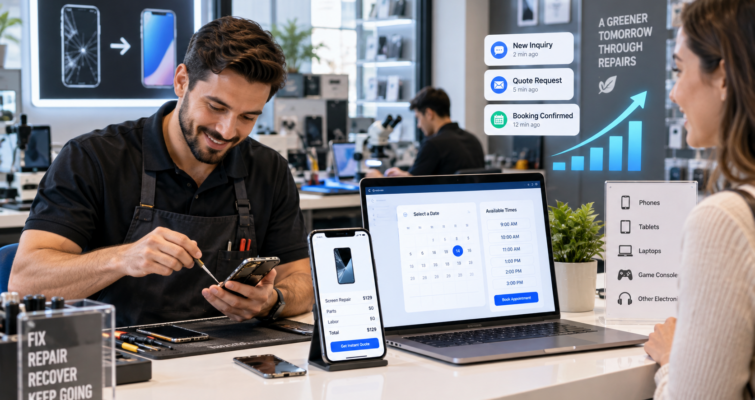
Traditional contact forms create a delay. An instant quote can answer a basic pricing question immediately, while online booking can let a ready customer reserve a time without waiting for a phone conversation.
Calls and forms should not disappear. Some customers still want to speak with a person before handing over a device. The strongest repair shop website gives customers more than one practical conversion path.
When Instant Quotes Work Best
Instant quotes work best when the repair has predictable inputs and consistent pricing. Common screen replacements, battery replacements, charging-port repairs, or device buyback estimates are easier to structure because the customer can select the brand, model, and problem first.
A quote process should be short. Device, model, service needed, and contact details may be enough. Too many technical questions can turn a convenience feature into another long form.
The wording also matters. If the amount can change after inspection, the website should describe it as an estimate rather than a guaranteed final price. That protects trust and sets realistic expectations before the customer arrives.
When a Repair Should Not Receive an Instant Price
Not every repair can be priced accurately before diagnosis. Liquid damage, motherboard faults, intermittent power issues, data recovery, and devices with multiple failures often need inspection before a technician knows the scope of the work.
Forcing these services into a fixed-price quote can create a poor experience if diagnostics later reveal a different problem or cost.
For complex repairs, an instant diagnostic request may be better. The website can explain what the shop needs, whether a diagnostic fee applies, and what happens after inspection. The customer still gets an immediate next step without an unreliable final price.
How Online Booking Can Reduce Friction
Online booking works when customers already know they want service and the shop can manage appointment availability. Instead of calling during business hours, the customer can choose a time while still on the website.
This is useful for diagnostics, scheduled drop-offs, onsite service, or repairs where the shop needs to manage technician capacity. It also gives customers who prefer not to call another way to convert.
Booking should remain simple. The customer should understand what they are booking, whether the appointment guarantees immediate repair or only a diagnostic slot, how long they should expect to be at the shop, and what they should bring with them. Clear expectations reduce no-shows and prevent the calendar from creating operational problems.
Do Not Let Booking Replace High-Intent Phone Calls
Some customers need answers before scheduling. They may want to confirm part availability, turnaround time, warranty coverage, data safety, or whether a device model is supported.
Forcing those customers into an appointment calendar can lower conversion instead of improving it. A visible phone number, contact option, and quote request should remain available even when online booking is offered.
The objective is not to automate every conversation. It is to remove unnecessary waiting while keeping human help available when a repair needs discussion.
Connect Quotes and Bookings to Lead Follow-Up
An instant quote is not valuable if the customer receives a price and disappears without any follow-up. The same is true when someone starts a booking but never completes it.
Quote requests and appointments should feed into a lead-management process so the shop knows who requested service, which repair they were interested in, and what happened next. This is where a repair-focused CRM can support the website rather than operating as a separate system.
A shop can follow up with someone who requested an iPhone screen quote but did not book, send an appointment reminder, or respond quickly when a lead needs more information. Automation should support service, not overwhelm customers.
Measure Whether the Tools Actually Generate More Leads
An instant quote or booking system should create measurable improvement. Track completed quotes, bookings, calls, forms, and how many inquiries become repair jobs.
Do not count every interaction as a lead. Opening a quote tool is not the same as completing it. Viewing the booking calendar is not the same as scheduling an appointment. The conversion event should represent a meaningful customer action.
Compare performance by service. Screen repair may convert well through instant pricing, while data recovery may perform better through a diagnostic request and consultation. The website should adapt to actual customer behavior.
Traffic Quality Still Matters
Conversion tools cannot fix poor traffic. If the website attracts people looking for DIY instructions, replacement parts, jobs, or services the shop does not provide, an easier booking process will not turn those visitors into qualified customers.
This is why website conversion should work together with Local SEO and paid traffic strategy. Service pages need to match commercial searches, Google Ads should send people to relevant landing pages, and the website should make the advertised next step easy to complete.
A shop can have an excellent booking system and still struggle if the wrong audience reaches it. Traffic quality, landing-page relevance, and conversion tools must support the same customer intent.
What Should a Repair Shop Implement First?
Start with the repairs that have the clearest pricing and the strongest customer demand. If screen or battery replacements are frequent and predictable, they may be good candidates for instant quotes. If diagnostics or scheduled drop-offs create bottlenecks, online booking may be more valuable.
Then test the process on mobile. A customer should be able to select a service, enter basic information, understand the next step, and complete the action without unnecessary fields.
Finally, connect the tool to tracking and follow-up. The shop should know where each lead came from, whether the customer booked, and whether the inquiry became revenue. Otherwise, it is hard to tell whether the feature improved performance.
Turn More Website Visitors Into Repair Leads
Instant quotes and online booking can help a repair shop get more leads when they reduce friction and fit the way the business actually operates. Common repairs can be easier to price or schedule while complex jobs still receive human guidance.
Repair Max Marketing builds repair-industry websites around lead generation and also offers tools for instant quoting and lead management through Repair Max CRM. The goal is to create a smoother path from website visit to repair opportunity, not simply add features for appearance.
If your website makes customers wait too long for a price, appointment, or response, Repair Max Marketing can review the conversion path and identify where quoting, booking, CRM follow-up, or other improvements may help.
Contact Repair Max Marketing to discuss your website and find the best way to turn more visitors into repair customers.