A repair shop can generate plenty of inquiries and still lose jobs because the follow-up process is scattered. One customer calls, another sends a text, someone else requests a quote online, and another sends a message through social media. If those conversations live in separate places, it becomes easy for leads to be missed, delayed, or forgotten.
A repair shop CRM helps organize those customer interactions into one system. CRM stands for customer relationship management. In a repair business, it can be used to capture leads, track conversations, manage follow-ups, request reviews, and move prospects from first inquiry to booked repair.
The purpose is to give the shop a repeatable process for handling the opportunities its marketing already creates.
What Does a Repair Shop CRM Actually Do?
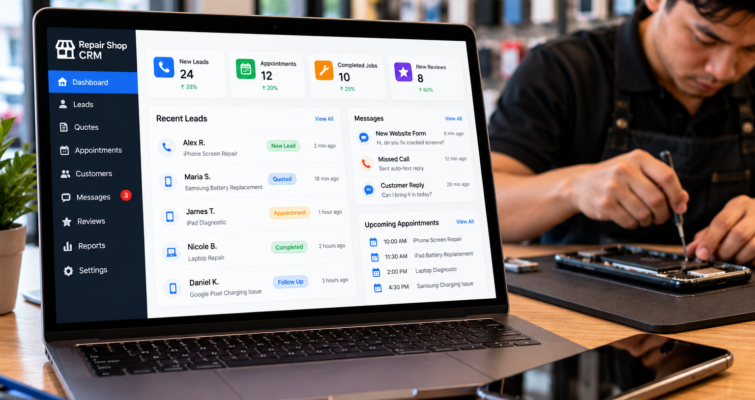
A CRM gives the shop a central place to manage people who have contacted the business. Instead of relying on memory, sticky notes, personal phones, or several disconnected inboxes, the team can see who reached out, why they contacted the shop, and what should happen next.
For electronics repair businesses, that may include phone calls, text messages, emails, website forms, instant quote requests, appointment inquiries, and social messages. A purpose-built repair shop CRM can bring those conversations together while also supporting lead tracking and automated follow-up.
When the shop can see where each lead stands, fewer opportunities disappear because nobody followed up.
A CRM Is Different From Repair Ticketing Software
Repair shops often already use a point-of-sale or repair ticket system. That software usually becomes most useful after a customer has committed to the repair. It may handle work orders, device information, parts, payments, or repair status.
A CRM focuses more heavily on the relationship before and around that transaction. It helps manage the person who asked for a quote but has not booked yet, the missed caller who needs a response, or the customer who completed a repair and should later receive a review request.
Some systems may overlap, but the key question is whether the shop has a reliable way to track leads before they become tickets. If not, marketing can generate demand without the business having a strong process to capture it.
Why Missed Calls and Slow Replies Cost Repair Jobs
Repair customers often contact several shops when they need help. A cracked iPhone screen, charging problem, broken console, or laptop failure can feel urgent, so customers may move quickly to the next option if they cannot get an answer.
A CRM can help reduce that gap by organizing incoming conversations and automating certain responses. For example, missed-call text-back can acknowledge a caller who could not be answered immediately, while automated follow-ups can remind a quote lead to continue the conversation.
Automation should support timely follow-up without becoming spam.
A CRM Helps Shops Follow Up on Quotes
Not every customer who asks for a price books immediately. Some are comparing shops, waiting for payday, checking whether a part is available, or deciding whether the device is worth repairing.
Without a follow-up system, those leads can disappear even though they were interested enough to request a quote. A CRM can keep the inquiry visible, record the service requested, and trigger a reminder or follow-up message when appropriate.
This works especially well when the CRM connects with instant quoting for repair shops. The quote captures the customer while intent is high, and the CRM helps the shop continue the conversation if the customer does not book immediately.
Lead Pipelines Make Sales Activity Easier to See
A useful CRM can organize leads into stages such as new inquiry, contacted, quote sent, appointment scheduled, repair completed, or lost. The exact stages should match how the shop actually operates.
This gives the owner a clearer view of what is happening between marketing and revenue. If many leads enter the pipeline but few reach booking, the problem may be follow-up, pricing, availability, or lead quality.
That visibility is important when evaluating Google Ads for repair shops or other paid campaigns. Clicks and form submissions matter less than whether qualified leads eventually become paying customers.
A CRM Can Improve Review Collection
Reviews play an important role in how customers evaluate a local repair business. The challenge is asking consistently without relying on employees to remember every time.
A CRM can build the review request into the customer journey. After a completed repair, the system can send a message inviting the customer to share honest feedback. The wording should remain neutral, and businesses should avoid practices that selectively ask only happy customers or pressure people into positive reviews.
A consistent review process supports the broader Local SEO strategy because the shop is strengthening customer proof while keeping the request process organized.
CRM Data Helps Show Which Marketing Produces Real Jobs
A repair shop needs more than lead counts to know whether marketing is working. Ten inquiries from one campaign may be less valuable than five inquiries from another if the second group books more profitable repairs.
When lead source, service type, conversation history, booking status, and final outcome are recorded, the business can make better decisions about where marketing budget should go.
For example, the shop may learn that data recovery leads close at a lower rate but produce higher-value tickets, while screen repair leads close more often and generate dependable volume. That information is more actionable than simply knowing how many people clicked an ad.
A CRM Works Best When the Website Feeds It Good Leads
The CRM is only one part of the system. A confusing website can still send low-quality or incomplete inquiries into the pipeline.
A conversion-focused repair shop website should clearly explain the services offered, show the real location and contact information, build trust, and give customers obvious ways to call, request a quote, or book.
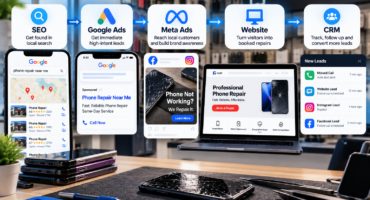
When those forms, quote tools, and contact actions connect to the CRM, the shop gets a cleaner handoff from website visitor to sales follow-up. That reduces manual entry and gives staff more context when they respond.
Does Every Repair Shop Need a CRM?
A small shop may manage leads manually for a while, but that becomes harder as volume grows.
A CRM becomes especially useful when the shop receives leads from several channels, runs paid advertising, uses online quotes or booking, has multiple employees responding to customers, or regularly loses track of follow-ups.
The best system should fit the shop and make it easier to see conversations, know the next action, and keep leads moving.

Turn More Repair Leads Into Paying Customers
A repair shop CRM is ultimately a lead-management and customer-communication system. It helps the business capture inquiries, organize conversations, follow up on quotes, monitor the sales pipeline, request reviews, and understand which leads actually turn into jobs.
Repair Max CRM is built specifically for repair businesses and includes a unified inbox for calls, texts, emails, and messages, instant quoting, pipeline management, automated SMS and email follow-ups, review requests, missed-call text-back, and mobile access.
When those tools are connected to the website and marketing strategy, the shop has a clearer path from lead generation to booked repair instead of treating every inquiry as a separate conversation.
Contact Repair Max Marketing to see how Repair Max CRM can help your shop organize leads, improve follow-up, and close more repair opportunities.