A missed phone call can easily become a missed repair job. Customers looking for phone, computer, tablet, or game console repair often contact several shops within a short period of time. If one business does not answer, the customer may simply move to the next result.
Missed-call text-back and automated follow-ups help reduce that loss by giving the customer another way to continue the conversation. Instead of allowing an unanswered call, quote request, or website lead to disappear, the shop can respond quickly, keep the lead organized, and guide the customer toward a booking or store visit.
These tools work best when they support real customer service rather than replace it. Automation should make the shop faster and more consistent while still giving staff the ability to step in when a customer needs a real answer.
Why Missed Calls Matter So Much for Repair Shops
Repair customers are often dealing with an urgent problem. A cracked iPhone screen, a laptop that will not start, a charging issue, or a game console with no picture can create immediate pressure to find help.
That urgency means a caller may not leave a voicemail or wait for a callback. If the shop is busy helping a walk-in customer or working on a repair, the lead can be lost before anyone knows what the customer needed.
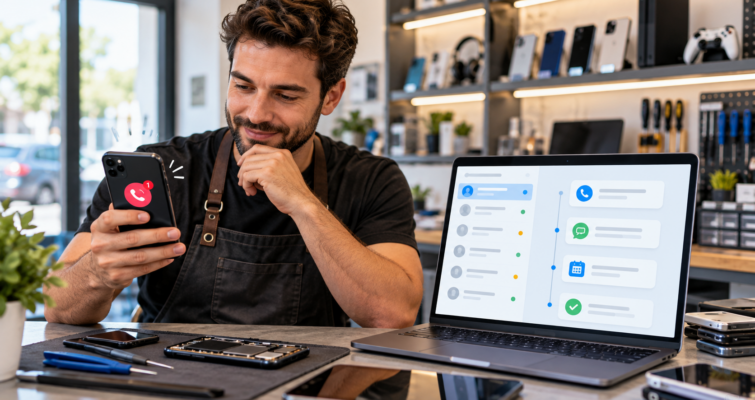
A missed-call text-back system can send an immediate message after an unanswered call. The customer can then reply with the device, problem, or repair they need instead of starting over with another business.
How Missed-Call Text-Back Works
The basic idea is simple. When an incoming call is not answered, the system sends a short text acknowledging the missed call and inviting the person to reply.
The message should sound natural and useful. It can let the customer know the shop is currently unavailable, ask what device needs repair, and explain that someone will follow up as soon as possible.
This turns a dead end into an active conversation. Even if the customer cannot talk on the phone, texting may be easier while they are at work, commuting, or comparing repair options.
A repair shop CRM can keep the missed call and text conversation connected to the same lead so staff can see the history when they respond.
Automated Follow-Ups Recover Leads That Did Not Book
Not every lost lead comes from a missed phone call. Some customers request a quote and never respond. Others start an online booking but stop before choosing a time. A customer may ask about a battery replacement, receive a price, and then become distracted before making a decision.
Automated follow-up gives the shop another opportunity to reconnect without requiring staff to remember every unfinished conversation. A short reminder can ask whether the customer still needs help, confirm that the quote is available, or provide a direct way to book.
The purpose is not to chase people indefinitely. A small number of relevant follow-ups is usually more useful than sending frequent messages that feel intrusive.
Speed Matters Because Repair Leads Cool Off Quickly
A repair lead is often most valuable immediately after the customer searches or calls. The longer the response takes, the greater the chance that the customer finds another shop, decides to replace the device, or postpones the repair.
Fast response does not require a technician to stop working every time the phone rings. Automation can acknowledge the inquiry instantly, while a staff member follows up when available.
That is one of the main advantages of using a CRM and communication workflow together. The shop can respond quickly without relying on memory, sticky notes, or separate inboxes.
Follow-Up Should Match the Customer’s Stage
Not every lead should receive the same message. A missed caller needs a different response from someone who already received a quote or booked an appointment.
A new lead may need a simple question about the device and problem. A quoted customer may need a reminder or clarification about availability. A booked customer may need an appointment confirmation. A completed customer may later be asked for honest feedback.
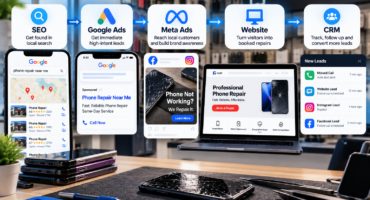
This stage-based approach is part of a complete repair shop marketing funnel because each message supports the next logical step in the customer journey instead of sending generic promotions to everyone.
Connect Follow-Up With Instant Quotes and Booking
Missed-call text-back becomes even more useful when the customer can move directly from the conversation to a quote or appointment.
For predictable repairs, the message can direct the customer to an instant quoting experience where they select the device, model, and repair type. More complicated issues can be routed to diagnostics or a staff conversation.
The fewer unnecessary steps between inquiry and booking, the easier it is for the customer to continue. This is especially important on mobile, where repair customers expect quick answers and simple actions.
Keep Lead Information in One Place
One reason follow-up fails is that customer conversations are scattered across phone calls, forms, texts, emails, and social messages. A staff member may respond in one place without realizing another employee already spoke with the same person.
A CRM helps organize those touchpoints around the lead. Staff can see whether the person called, requested a quote, received a message, booked, or still needs follow-up.
That visibility also makes accountability easier. The shop can identify leads that were never contacted, quotes that were not followed up, and customers who stopped moving through the process.
Measure Whether Recovered Leads Become Paying Jobs
Automation is only valuable if it improves real business outcomes. A shop should track more than the number of texts sent or replies received.
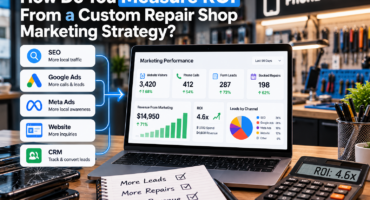
Useful measures include missed calls recovered, conversations started, quote requests, appointments booked, customers who showed up, completed repairs, and revenue when reliable tracking is available.
This is the same principle that should be used with Google Ads for repair shops. A campaign that generates many inquiries may still be weak if those leads never become paying repair jobs.
Tracking the full journey helps the business determine whether the follow-up system is recovering valuable opportunities or simply creating more activity.
Automation Still Needs Human Oversight
Automated messages should not pretend to know things the system cannot verify. If part availability, final pricing, turnaround time, or diagnostics require technician review, the message should say so.
Customers should also have a clear way to stop unwanted messages, and shops should use texting in a way that respects customer consent and applicable communication rules. The safest approach is to keep messages relevant to an existing inquiry and avoid aggressive promotional sequences.
Staff should regularly review the workflow for outdated wording, incorrect links, unanswered replies, and situations where customers are receiving unnecessary messages.
Use Automation to Support Better Customer Service
Missed-call text-back and automated follow-ups are not valuable because they replace employees. They are valuable because they help the shop respond consistently during the moments when leads are easiest to lose.
A customer who could not reach the shop gets an immediate path to reply. A quote that would have been forgotten receives a timely reminder. Staff can see which leads still need attention instead of relying on memory.
Combined with a conversion-focused repair shop website, a CRM, instant quoting, and clear lead tracking, these workflows can make the entire customer journey easier to manage.
Repair Max Marketing helps electronics repair businesses connect lead generation with follow-up systems designed around calls, quotes, bookings, and real repair customers.
Contact Repair Max Marketing to review where your shop may be losing leads and how missed-call text-back and automated follow-up can help recover more opportunities.